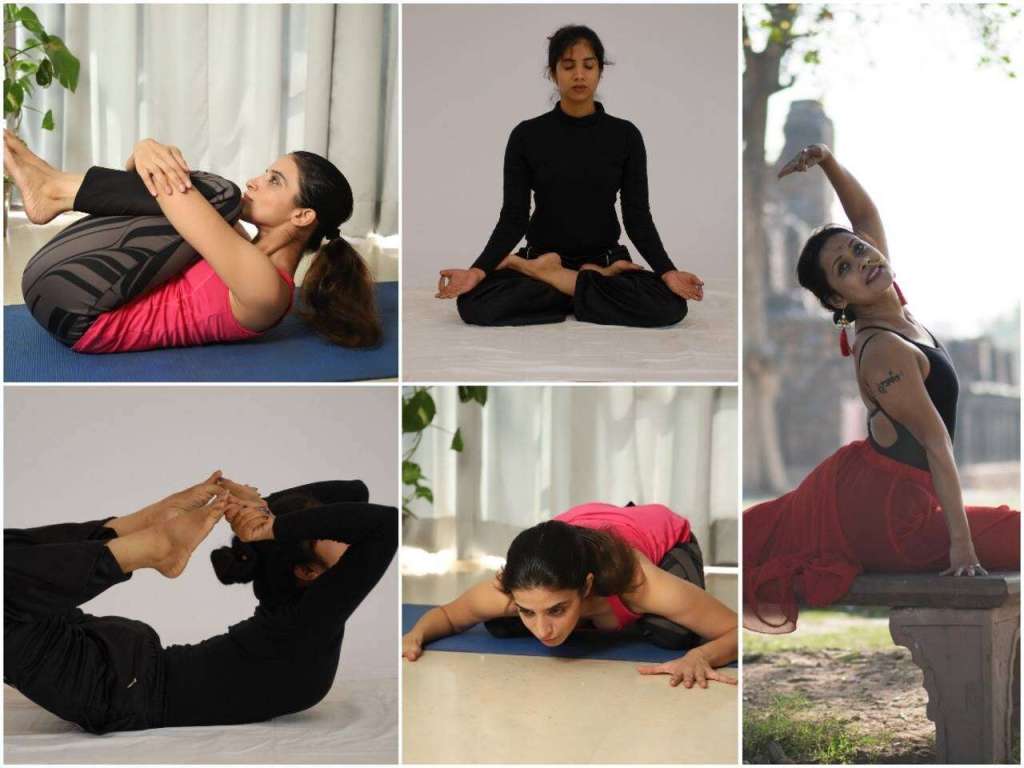
1. Tadasana (Mountain Pose):
– Stand with your feet hip-width apart, spine straight, and arms relaxed by your sides.
– Engage your leg muscles, lift your kneecaps, and lengthen your spine.
– Benefits: Improves posture, strengthens thighs and ankles, increases awareness and focus.
2. Adho Mukha Svanasana (Downward Facing Dog):
– Start on your hands and knees, with hands slightly forward of your shoulders and knees under your hips.
– Press your hands into the ground, lift your knees, and straighten your legs, forming an inverted “V” shape with your body.
– Benefits: Stretches the shoulders, hamstrings, calves, and arches of the feet, energizes the body, calms the mind.
3. Virabhadrasana II (Warrior II Pose):
– Stand with your legs wide apart, turn your right foot out to the side, and align your left heel with the arch of your right foot.
– Bend your right knee, keeping it directly above the ankle, and extend your arms out to the sides, parallel to the floor.
– Benefits: Strengthens the legs and core, improves balance and stability, enhances focus and concentration.
4. Bhujangasana (Cobra Pose):
– Lie flat on your stomach, with your palms placed next to your shoulders and elbows bent.
– Press your palms into the ground, lift your chest, and extend your spine while keeping your pelvis and legs on the floor.
– Benefits: Opens the chest and lungs, strengthens the back muscles, stimulates digestion, alleviates stress and fatigue.
5. Balasana (Child’s Pose):
– Start on your hands and knees, then lower your hips back towards your heels while stretching your arms forward.
– Rest your forehead on the floor and relax your entire body.
– Benefits: Releases tension in the back, shoulders, and neck, promotes relaxation, soothes the nervous system.
Remember, it’s always essential to practice yoga asanas under the guidance of a qualified instructor, especially if you’re a beginner, to ensure proper alignment and avoid any injuries.
 PRATHAM